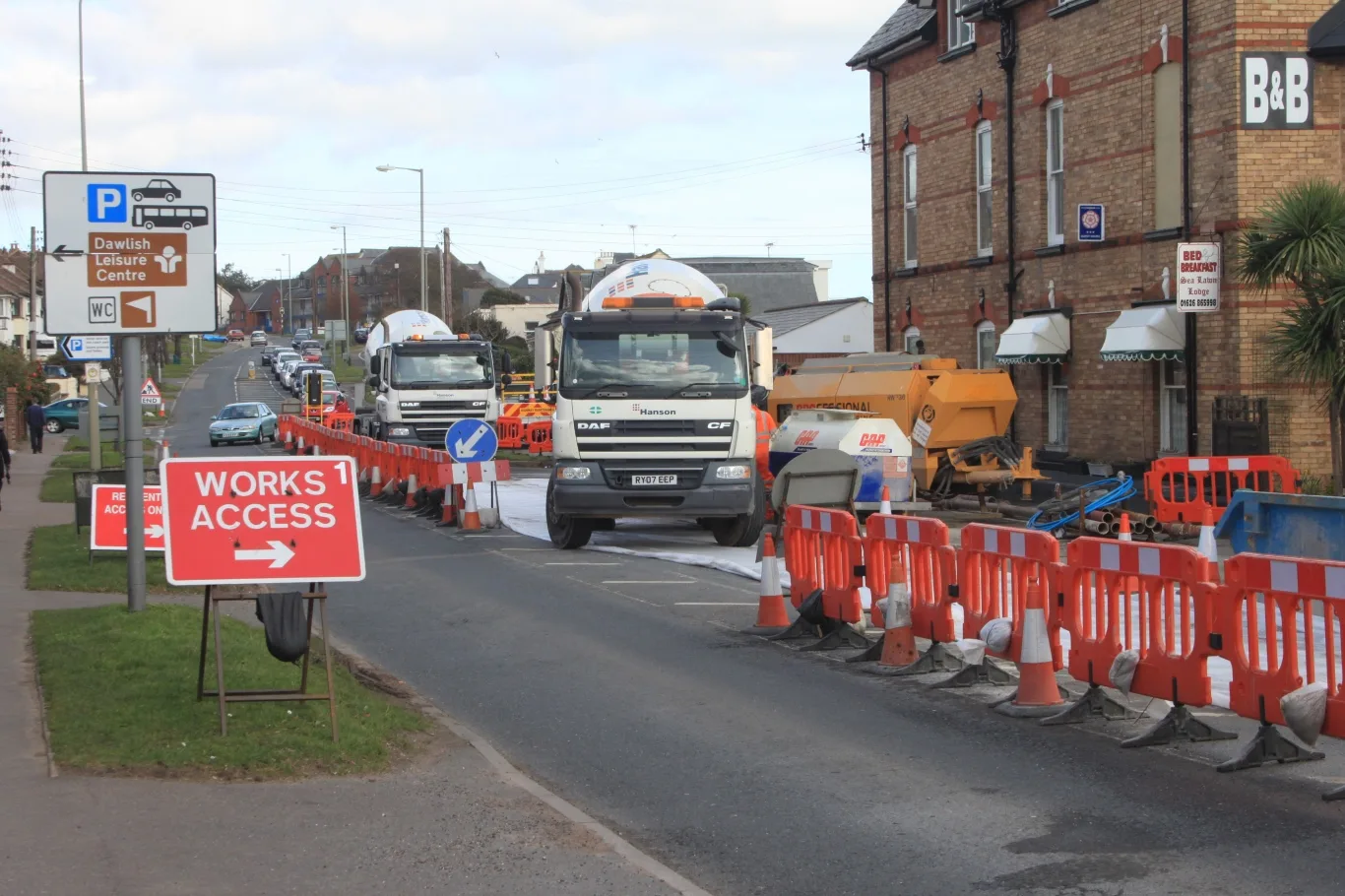
Concrete is one of those jobs where the headline price per cubic metre is only half the story. Delivery, minimum loads, part-load surcharges and pump hire can move the bill more than the grade of concrete you pick. This guide sets out the real UK numbers so you can budget before you ring the supplier, and shows where mixing your own from bags actually saves money.
Prices below are typical UK ranges for 2026 and exclude VAT unless stated. They vary by region, supplier and how far the truck has to travel, so treat them as a planning guide and get a written quote for your postcode before you commit. London and the South East usually sit at the top of every range, often 15 to 25 percent above the rest of England.
| What you are paying for | Typical UK cost |
|---|---|
| Ready-mix, C25/30 domestic grade | £105 to £130 per m³ delivered |
| Standard plant minimum load | 3 to 4m³ (often more in London) |
| Part-load (short-load) surcharge | £15 to £30 per m³ short |
| Mixing your own, materials only | £150 to £200 per m³ |
| Volumetric mini-mix | 15 to 25 percent premium per m³ |
| Line pump hire | £275 to £550 per day |
Ready-mix concrete price per m³
For a standard domestic grade (C25/30, the usual choice for footings, slabs and shed bases), expect roughly £105 to £130 per cubic metre delivered across most of England. Lower-strength fill such as GEN1 sits a little below that, and structural commercial grades like C30/37 sit a little above. In inner London the same mix can run £135 to £175 per m³.
A rough guide by grade:
- GEN1 / GEN3 (fill, blinding, non-structural): around £100 to £115 per m³
- C25/30 (domestic footings, slabs, bases): around £105 to £130 per m³
- C30/37 (structural, commercial frames): around £125 to £160 per m³
Add-ons change the figure. Fibre reinforcement adds roughly £30 to £35 per m³, a wetter “pumpable” mix can add a couple of pounds per m³, and frost-resistant or rapid-set mixes cost more again.
Delivery, minimum loads and part-load charges
This is where small jobs get caught out. Most standard ready-mix plants run 6m³ and 8m³ trucks and set a minimum load of around 3 to 4m³ (higher in London, where 4 to 6m³ is common). Order less than the minimum and you pay a part-load or short-load surcharge, typically £15 to £30 per cubic metre short, and inner-London small loads can carry a flat surcharge running into the low hundreds.
A few other charges worth knowing about:
- Delivery: often free on a full load within a set radius, otherwise around £50 to £200 depending on distance.
- Waiting / offload time: usually about half an hour is included, then you pay for the driver’s time after that, so have your shuttering, barrows and labour ready before the truck arrives.
- Returned (unused) concrete: you can be charged for what comes back, so order accurately.
If you only need a small amount, volumetric (mini-mix) suppliers mix on the truck and charge only for what you use, often from 0.5m³ with no part-load surcharge, but at a 15 to 25 percent premium per m³. For tricky small pours that can still work out cheaper than paying a short-load fee on a standard truck.
Mixing your own from bags
Mixing on site from bagged cement and ballast feels cheaper because there is no delivery fee and no minimum order, but per cubic metre the materials usually cost more than ready-mix, before you count your time and the cost of hiring or buying a mixer.
A standard domestic mix needs roughly:
- All-in ballast: about 1.75 tonnes per m³ of finished concrete. A bulk bag of ballast is around £48 to £68, or roughly £35 to £55 per loose tonne delivered.
- Cement: about 6 to 7 bags of 25kg OPC per m³ for a structural mix, at roughly £7.50 to £9.50 a bag.
Add it up and the materials alone land around £150 to £200 per m³ for a strong mix, and small all-in-bag “post mix” or “concrete mix” products work out far higher again per cubic metre. So bags are not about saving money per m³, they are about avoiding delivery fees and minimums on tiny quantities.
If you do mix on site, our guide to how to mix concrete walks through the cement, sand and ballast ratios, the right water content and the slump test, and whether to mix by hand or hire a mixer.
To get your own quantities right, set the slab size and mix and let our concrete calculator work out the cement, sharp sand and ballast, plus the total m³ if you decide to order ready-mix instead.
When ready-mix beats mixing yourself
A simple rule of thumb:
| Situation | Usually cheaper / better |
|---|---|
| Under about 0.25m³ (a few post holes, a small repair) | Bagged mix |
| 0.25m³ to 1m³ (small base, path) | Bags or volumetric mini-mix |
| 1m³ to 3m³ (shed base, large slab) | Volumetric mini-mix, or ready-mix if near the minimum |
| Over 3m³ (foundations, driveway, oversite) | Ready-mix, almost always |
Beyond a cubic metre or so, mixing by hand or in a small mixer stops being realistic. One cubic metre is around 80 to 100 bags of ballast to barrow, mix and place before it goes off, and a large pour has to be placed in one continuous operation to avoid cold joints. Ready-mix delivers it in minutes, at a consistent, certified strength, which is exactly what building control wants to see on a structural foundation.
The crossover point is the minimum load. Once your job needs more than the supplier’s 3 to 4m³ minimum, ready-mix is nearly always cheaper per m³ as well as faster, because you are buying a full or near-full load rather than paying surcharges.
A shed base is the classic job in that middle band: small enough to mix yourself, but often close to a ready-mix minimum. Our guide on how to lay a shed base covers the ballast and cement mix, the formwork and the curing once you have settled on a route.
Concrete pump hire
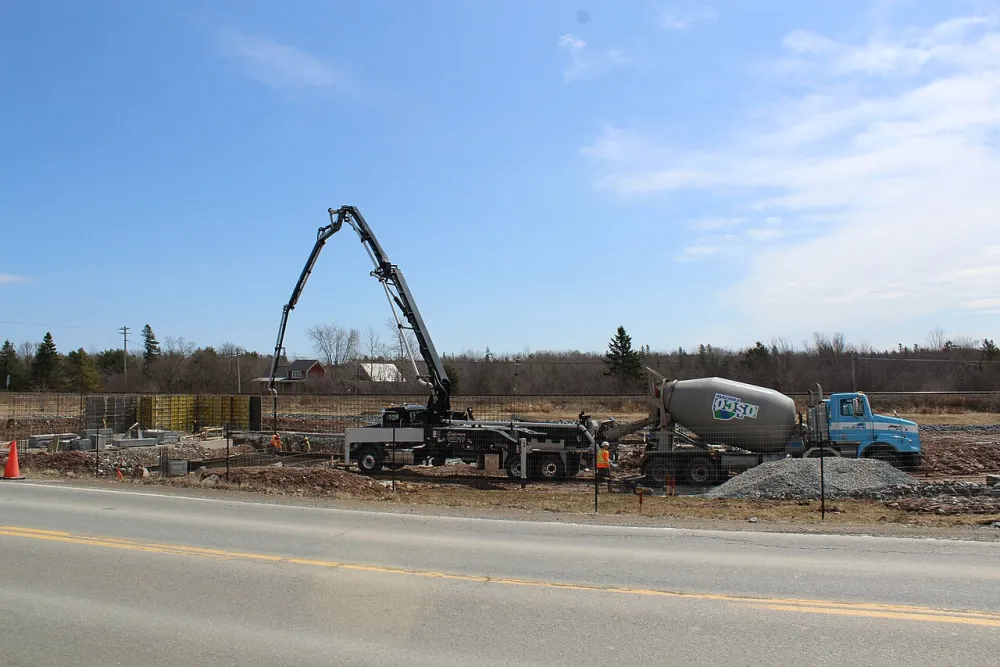
If the truck cannot get its chute to the pour (a back garden, a basement, a first-floor slab), you hire a pump. There are two types:
- Line pump (ground-level, towable): roughly £275 to £550 per day in most UK regions, with London at the top end. This covers most domestic jobs and usually includes a set length of line, with extra hose charged per metre.
- Boom pump (lorry-mounted, reaches over buildings): from around £500 to £800+ per day, and large commercial booms exceed £1,000.
Check whether the operator is included; if not, add roughly £150 to £250 a day. Hiring for a week typically drops the daily rate by 30 to 45 percent, so for a multi-day job it pays to ask for an extended rate. Some ready-mix suppliers bundle pump and concrete together, which can simplify both the booking and the price.
How to keep the cost down
- Measure the volume properly so you order the right amount and avoid both short-load surcharges and paying for returned concrete. Work out exact quantities with our concrete calculator.
- Get to the minimum load if you can. Pouring a footing and a slab on the same day can push you over the threshold and onto a better per-m³ rate.
- Have everything ready before the truck arrives: shuttering fixed, ground prepared, barrows and labour on site, so you do not pay for waiting time.
- Compare volumetric vs standard for anything between 0.5 and 3m³. The mini-mix premium per m³ can still beat a part-load fee.
- Get two or three local quotes. Ready-mix is a local market and prices move with plant location, demand and how far the truck travels.
FAQ
How much does 1m³ of concrete cost in the UK?
For a standard C25/30 domestic mix, roughly £105 to £130 delivered across most of England, more in London and the South East, and more again for higher grades or added fibres. Below the supplier’s minimum load you also pay a part-load surcharge.
Is it cheaper to mix my own concrete or buy ready-mix?
For very small amounts (under about 0.25m³) bags are cheaper because there is no delivery fee or minimum. Once you are past a cubic metre or so, ready-mix is usually cheaper per m³ as well as much faster and more consistent.
What is the minimum amount of ready-mix concrete I can order?
Standard plants typically set a 3 to 4m³ minimum (often 4 to 6m³ in London). Order less and you pay a part-load surcharge of around £15 to £30 per m³ short. Volumetric mini-mix suppliers will do smaller loads, often from 0.5m³, without that surcharge but at a higher rate per m³.
Do I need a concrete pump?
Only if the truck cannot reach the pour with its chute. For a clear, accessible drive or trench you do not. For a rear garden, a basement or an upper floor, a line or boom pump is usually the answer.
Does the price include VAT?
The ranges here exclude VAT. Most quotes for materials and delivery are shown ex-VAT, so add 20 percent to estimate the final figure, and always check what each quote includes.
Work out your quantities first
Before you ring round for prices, get the volume right. Enter your slab or footing size and mix into our concrete calculator and it gives you the cement, sharp sand and ballast for mixing your own, plus the total cubic metres to order as ready-mix, so you can compare both routes on the same numbers.
Sources: Checkatrade ready-mix concrete cost guide, MyBuilder ready-mix concrete cost guide and the Heidelberg Materials ready-mixed concrete pricing guide. Prices vary by region and supplier; figures are indicative for 2026 and exclude VAT.